Minimalist Mobile Quoridor, Short Tactical Matches, Local Face-to-Face Play
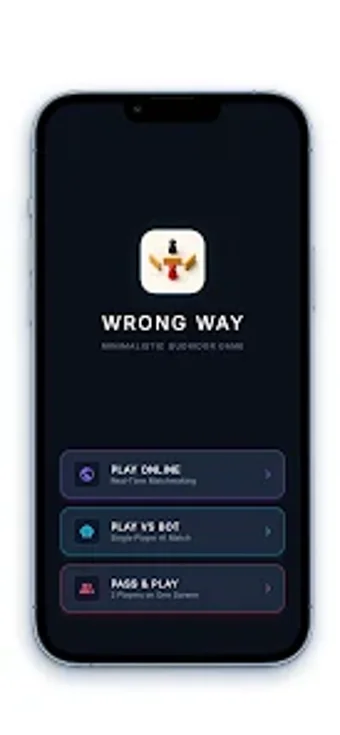
Wrong Way - Quoridor Game, from WECS LABS INC, adapts the abstract strategy board game into a focused Android title. It stages short, turn-based encounters that reward spatial planning and tactical foresight across a compact grid. The app keeps the presentation uncluttered while offering touch-first controls, match pacing options, and micro-feedback tools to speed play. Fans of abstract tabletop strategy and quick mobile duels get a distraction-free, portable tabletop experience.
What kind of game is it and how do matches play out?
Wrong Way is a digital interpretation of the Quoridor family of board games, centered on a simple but demanding core loop: each turn a player chooses between advancing a pawn or altering the board geometry to hinder the opponent. Victory arrives when a pawn reaches the opposite edge. The ruleset preserves the essential constraint that a wall may never completely block all paths, keeping every position solvable and tactical.
Does it support single-player and local multiplayer sessions?
The app includes both solo and shared-device play, with a single-device pass-and-play mode for two players facing each other. Single-player matches use an adaptive AI engine that calculates deep path differentials and shifts into a more aggressive survival posture in the endgame, offering a changing opponent behavior across a single match rather than a static difficulty curve.
What does the game look and feel like on-screen?
The visual treatment is deliberately spare: a dark slate field accented with cyan and rose highlights gives high contrast to pieces and walls. Controls use drag-and-drop wall placement designed to reduce misplacements, and a small emoji tray lets players send micro-reactions during matches. The interface emphasizes clear, readable elements so decisions remain the focus.
How approachable is it and what keeps players returning?
Onboarding is straightforward because the rule set is compact, making early turns accessible to new players while depth arises from board geometry and timing. Built-in turn timers encourage brisk sessions and the absence of advertisements supports uninterrupted play. Those two factors combine to produce short, replayable matches that reward repeated tactical refinement rather than long grind-based progression.
A concise recommendation for fans of compact abstract duels
Wrong Way suits players who prefer brief, cerebral matches and local, face-to-face encounters on a single device. Its focused rules and clear presentation make each round a tidy mental exercise; players seeking extended campaigns or remote matchmaking should note the design emphasis on quick, local sessions rather than sprawling progression or online play.